
Guide
Pipe Relining vs Pipe Replacement: Which is Right for Your Property?
Pipe relining and pipe replacement are the two main options for repairing a damaged underground pipe in Sydney. In most residential properties, relining delivers a stronger result at a lower cost — without any excavation.
This guide covers the key differences in cost, disruption, durability and downtime, explains when relining is suitable, and sets out the narrow circumstances where excavation is genuinely necessary.
What is pipe relining?
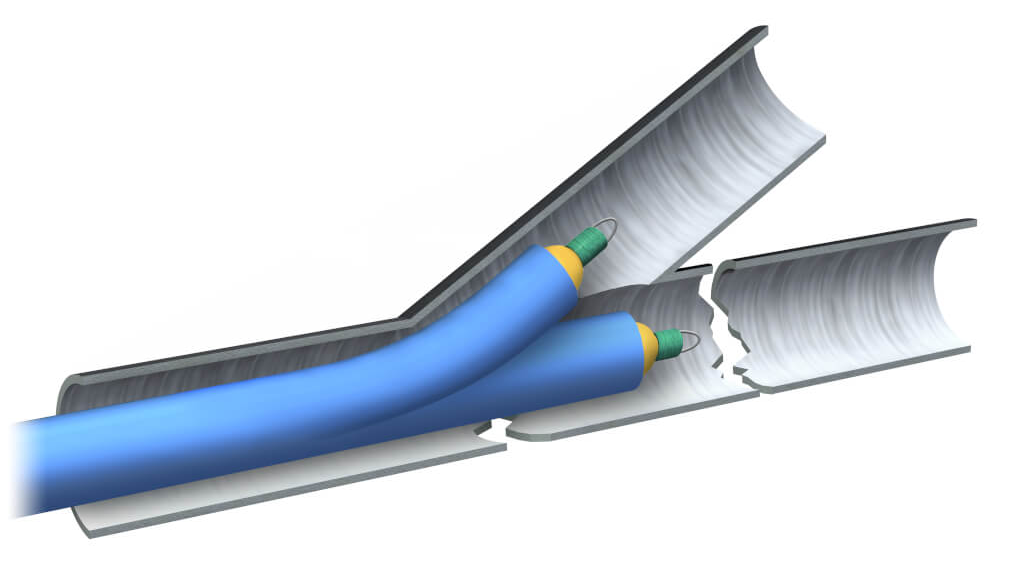
Pipe relining is a trenchless method of repairing a damaged underground pipe from the inside. A resin-saturated structural liner is inserted into the existing pipe, inflated against the pipe wall and cured until solid. The result is a new pipe formed within the old one — without any excavation.
Pipe relining is also called trenchless sewer repair or no-dig pipe repair because the entire process happens through an existing access point. No ground is broken, no surfaces are disturbed.
Pipe replacement, by contrast, requires digging up the ground above the pipe, removing the old pipe, laying a new one, and then reinstating whatever surface was disturbed. The difference in cost and disruption is substantial.
At a glance: the key differences
The five factors that matter most when choosing between relining and excavation.
| Factor | Pipe Relining | Pipe Replacement |
|---|---|---|
| Cost | Spend goes on the repair itself | Up to 90% spent on excavation labour |
| Disruption | No digging, no mess, no reinstatement | Property dug up, garden and paving affected |
| Downtime | Line stays live (paused a few hours to cure) | Line offline for one or more days |
| Durability | 10× stronger than PVC, 50-year warranty | Standard PVC, no product warranty |
| Timeline | Most residential jobs done in a day | Multi-day process including reinstatement |
Why relining is almost always cheaper
The sticker price of pipe replacement can look deceptively low until you factor in everything excavation actually requires: jackhammering concrete, breaking up pavers, removing garden beds, disposing of soil, and then reinstating everything you disturbed to access the pipe. That reinstatement cost alone often exceeds the cost of the pipe repair itself.
40%
of relining cost goes on labour
90%
of replacement cost goes on excavation
With relining, there’s nothing to reinstate because nothing is disturbed. Our technicians access the pipe through existing entry points (typically a cleanout or inspection opening) and install the liner from there. Published pricing starts from $2,500 setup + $450/m.
What you actually get with pipe relining
Relining isn’t a compromise on quality to avoid digging. It produces a structurally superior pipe. The Nuflow system we install is the only pipe relining product manufactured in Australia, certified for drinking water contact, and backed by a manufacturer warranty independent of Maida.
Lower all-in cost
Up to 90% of excavation spend goes on labour, not the pipe itself. Relining eliminates that overhead entirely.
No excavation, no mess
We work through existing access points. Driveways, gardens, tiled floors and slabs stay completely undisturbed.
Structurally superior pipe
Our Nuflow liner is 10x stronger than PVC and bonds permanently to the host pipe. Not a patch. A new pipe formed inside the old one.
50-year backed warranty
Insured up to $50M through Nuflow head office. The warranty follows the property, not the contractor.
Back in service the same day
Most residential relining jobs are completed within a single day. Excavation typically takes several days minimum.
Property left intact
No reinstatement of paving, concrete or landscaping required. What we find on arrival is what you see when we leave.
Is pipe relining worth it?
Pipe relining is worth it in the vast majority of cases where a pipe has identifiable damage — cracks, root infiltration, open joints or deteriorated sections — but retains its basic shape. The cost is significantly lower than excavation, the structural result is stronger than a new PVC pipe, and the 50-year warranty removes the risk of future failure.
The only situation where relining is not worth it is when the pipe has fully collapsed and no liner can be inserted. That scenario is rare in Sydney residential properties. A free CCTV inspection confirms which applies to your pipe within an hour of us arriving.
When excavation is actually necessary
We’ll always tell you honestly if relining isn’t suitable. There are situations where digging is the only practical option:
- A pipe has fully collapsed with no navigable channel remaining
- Severe pipe misalignment or offset that blocks liner insertion
- A section of pipe has deteriorated so badly it cannot support a liner
These scenarios represent a small minority of pipe failures. A free CCTV inspection will confirm within minutes which method is appropriate for your pipe before any commitment is made. Book yours here.
Drain unblocking vs pipe relining: why clearing is a short-term fix
High-pressure jet cleaning is a useful tool for an urgent blockage, but it doesn’t repair the pipe. It clears what’s inside it. The crack, open joint or structural weakness that allowed roots or debris in remains completely intact and will cause the same problem again, typically within months.
Repeated clearing also carries risk: aggressive jetting on a fragile pipe can worsen existing cracks or cause new ones. And every callout you pay for is money not going toward a permanent repair.
If you’ve had the same drain cleared more than twice, there’s almost certainly a structural defect behind it. Relining fixes the root cause and carries a 50-year warranty. Clearing it again just delays the inevitable.
Common questions
Is pipe relining cheaper than replacement in Sydney?
In most residential scenarios, yes. Often significantly. Traditional excavation typically spends 80–90% of its budget on digging and reinstatement, not the actual pipe. Relining directs almost all spend toward the repair itself.
See full pricingDo I lose use of my plumbing during relining?
Only briefly. We ask that the line is not used during liner insertion and inflation (typically a few hours). Replacement can take the line offline for one or more days.
When is pipe replacement actually necessary?
When a pipe has fully collapsed, severely misaligned or deteriorated beyond the point of rehabilitation, excavation may be the only option. This is rare. A free CCTV inspection will confirm which applies to your pipe within minutes of us arriving.
Is drain unblocking a long-term fix?
No. Jet cleaning removes the blockage but leaves the defect (the crack or joint that roots entered through) completely open. Roots regrow, typically within months. Relining seals the entry point permanently.
Blocked drains serviceWhat pipe types and sizes can be relined?
We reline sewer, stormwater, PVC, clay, cast iron, concrete and fibro cement pipes from 40mm up to over 1 metre in diameter. Pool pipes and pipes under slabs or driveways are no obstacle.
How the process worksWhat is pipe relining?
Pipe relining is a trenchless method of repairing a damaged underground pipe from the inside. A resin-saturated felt liner is inserted into the existing pipe, inflated against the pipe wall and cured until solid. This forms a new structural pipe within the old one. No excavation is required.
How does pipe relining work?
A CCTV camera is used to locate the damage and measure the repair length. A resin-saturated liner is pulled into position inside the pipe, inflated against the pipe wall using an air bladder, and left to cure for 2–4 hours. Once cured, the bladder is removed and the liner is inspected by camera. The relined pipe is structurally complete and ready for full service.
Is pipe relining worth it?
Yes, in most cases. Pipe relining costs significantly less than excavation and replacement, produces a stronger pipe, and carries a 50-year warranty. Repeated drain jetting clears the blockage but not the defect — roots grow back through the same crack within months. A single reline eliminates the root cause permanently and is almost always more cost-effective over any 5-year period than ongoing jetting.
What does trenchless sewer repair mean?
Trenchless sewer repair — also called pipe relining or no-dig pipe repair — means repairing a damaged sewer or drain pipe without digging up the ground above it. The repair is made by inserting and curing a structural liner from inside the pipe, through an existing access point. No trenches, no broken surfaces, no reinstatement.
Not sure which option is right for your property?
Get a free CCTV inspection and fixed written quote
We’ll camera your pipe, show you exactly what’s going on, and confirm whether relining or replacement is the right call with a fixed price before any work starts. No obligation.